
Dear friends,
I open Restoring Childhood with the following:
A New Kind of Silent Spring
In Silent Spring, the now classic book published in 1962, Rachel Carson wrote of the bleak prospect of a world without the sounds and sights of birds. She described how a narrow, blinkered focus on one kind of “progress,” a massive use of insecticides to increase agricultural yields and reduce insect-borne diseases, was having a disastrous side effect. It was killing birds and, more generally, upsetting the ecological balance on which the natural world depends.
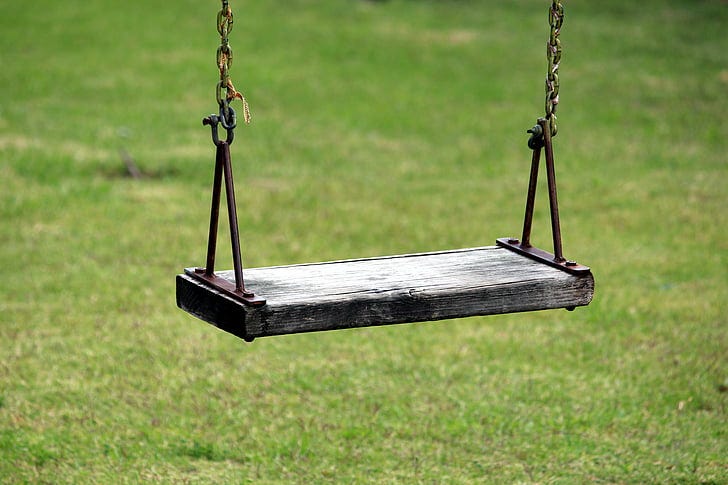
Today, I see a different silent spring. Birds are back thanks to Carson and the environmental movement she sparked. I look up from my suburban lawn and see hawks gliding above, and I hear titmice and sparrows twittering in the bushes. But I don’t see or hear children. Even on a glorious spring Saturday afternoon I see and hear no children. They are not on or near the street. They are not running across neighborhood lawns. They are not in the little park near my home, which is almost always empty. Sometimes there’s an adult there walking a dog, and on two or three occasions I’ve seen an adult sitting on one of the lonely swings with a small child on her lap. But in seven years of living here I have yet to see children playing in that lovely park. Decades ago, wherever I lived or traveled, I saw and heard children, almost any time school wasn’t in session and there was daylight.
Children still exist. I see them standing outside in the morning waiting for the school bus, guarded by an adult. In the afternoon, I see them get off the bus and go straight into their homes with their guards. Sometimes, as I tour around on my bicycle, I see groups of children on a manicured sporting field following the directions of adult coaches in some sort of athletic event while their parents sit on the sidelines and cheer. But I don’t see them out on their own, making their own games. Almost nowhere in public places do I see and hear children chasing, laughing, squabbling, shouting at one another joyfully or angrily, being cute or annoying, delightful or naughty, as children are biologically designed to do and be.
If a Rip Van Winkle had fallen asleep in the 1950s and awakened in the 21st century, he would be startled by the change. What have we done with the children? The aim of this book is to answer that question and show why we should and how we can return childhood to children and bring them back into our public social world.
….
Then, after an autobiographical insertion about what led me to write this book, I go on:
Disastrous Side Effects
As a society, we are no longer granting kids the freedoms and responsibility they need. We still love and care for children. That’s clear. But societal changes have led us to love and care for them too often in ways that interfere with the biologically normal course of their development. We see them as precious, in the sense of that term that means not just valuable but fragile and needing extraordinary care. As a culture, we have been focused, in a narrow and blinkered way, on a certain kind of “progress” with children, that of protecting them from what we perceive as dangers and “educating” them in socially prescribed narrow ways. Such cosseting has arguably reduced the rate of some accidents and contributed to the documented decline in teen pregnancies over recent decades. But we have not paid enough attention to the disastrous side effects of such continuous care, teaching, guidance, and oversight.
When I say “disastrous side effects,” what do I mean? Here’s one index. In 2019 (a year I choose because it was just before the COVID pandemic), a large, demographically balanced survey of 14- to 18-year-olds by the U.S. Centers for Disease Control revealed that, by their own reports, 36.7% experienced persistent feelings of sadness or helplessness over the past year, 18.8% seriously considered suicide, 15.7% made a suicide plan, 8.9% attempted suicide one or more times, and 2.5% made a suicide attempt requiring medical treatment. As we move through this book, I will document evidence that over the last seven decades, kids’ mental health has declined in step with decreases in their opportunities to play and explore independently and with increases in societally imposed achievement pressures. I will describe multiple lines of evidence that these changes, which interfere with what I refer to as “normal childhood,” are responsible for the decline in mental wellbeing.
By treating children as fragile we, as a society, have made them fragile. By devoting so much time and attention to educating them along narrow, school-determined lines, we have deprived them of opportunities to employ their natural means of educating themselves, especially their means of developing initiative, courage, agency, self-understanding, and social prowess. Such lessons can only be learned through self-motivated play and adventure, especially with other kids, away from immediate adult control. For real-world success, the lessons we are preventing kids from learning are more valuable than the academic lessons with which we have become obsessed. Even more obviously, by depriving them of free play and other self-directed adventures, we are depriving them of the activities that bring kids the greatest joy, that make life for them worthwhile.
How did this all creep up on us? It didn’t come all at once. It was gradual, over decades, so gradual that many of us didn’t notice. From one year to the next, things were not much different. But if a Rip Van Winkle had fallen asleep in the 1950s and awakened in the 21st century, he would be startled by the change. Where are the children? If Rip happened to be a mid-20th century expert on children’s mental health and were to check the records on that after he awoke, he would be not just startled but horrified.
Concluding Thoughts
For more about the book and how to order it, see the book page of my personal website. For another excerpt from the book, see Letter #127.
I am not just writing about children’s need for freedom but am supporting nonprofit organizations working toward that end. All funds I receive from paid subscriptions to Play Makes Us Human are contributed to those organizations.
With respect and best wishes,
Peter
You're so right to compare current silent neighborhoods to Silent Spring. Brilliant wake-up call. And here's to turning things around.
Such a great analogy with Silent Spring. That's such an apt comparison.